
Put a man from Hamburg and a woman from Munich in a room and ask them about food, faith, clothes, or how to say hello. You get two answers that barely overlap, and both of them are correct.
The reason is time.
German culture has been taking shape for over two thousand years. For most of that stretch, a person’s whole world was the valley they were born in. The next valley was abroad—not abroad, exactly, but far enough that the bread there had another name. Nothing traveled far, and whatever did travel changed on the way.
Now stretch that across a country reaching from the North Sea to the Alps. What comes out is four big subcultures with their own histories: Berlin, Munich, Hamburg, and Cologne. Want it finer? Add the state capitals, then keep going down from there. All of them share a language (and not a lot else).
Which is the good news, actually.
It means the bread changes as you drive. The greeting changes. Somewhere around the Main, the church on the market square switches denomination. And the sausage in the next town over is a different sausage with a different name. There’s a local who will explain the difference at length, too.
So the pages below are sorted by what people here actually do with their days. Start wherever you like.
German Traditions and Everyday Life
This is where the old fragmentation shows up most clearly, and where it’s the most fun. Take bread. The Deutsches Brotregister (the national bread register) lists more than 3,000 distinct varieties.
Remember the valley with its own name for bread? That’s what three thousand of them look like on a list. It sounds like bragging until you spend a week driving here. Watch the loaf in the bakery window change shape from one region to the next.
German bread culture went onto the national register of intangible cultural heritage in 2014. Not the UNESCO world heritage list, which half the internet will tell you, but the domestic register. The distinction matters to precisely nobody standing in a bakery at seven in the morning. (I only mention it because getting it wrong is so common.)
The same pattern runs through everything else on this shelf. German beer is regional to the point of absurdity, with breweries that have never sold a bottle outside their own valley. Faith split along a line the Reformation drew in the sixteenth century and then mostly stayed put. Even the outfit the world thinks of as German belongs to one corner of the south. In Kiel it would look like a costume.
Christmas is the exception. That one we do together, loudly, and for about five weeks.
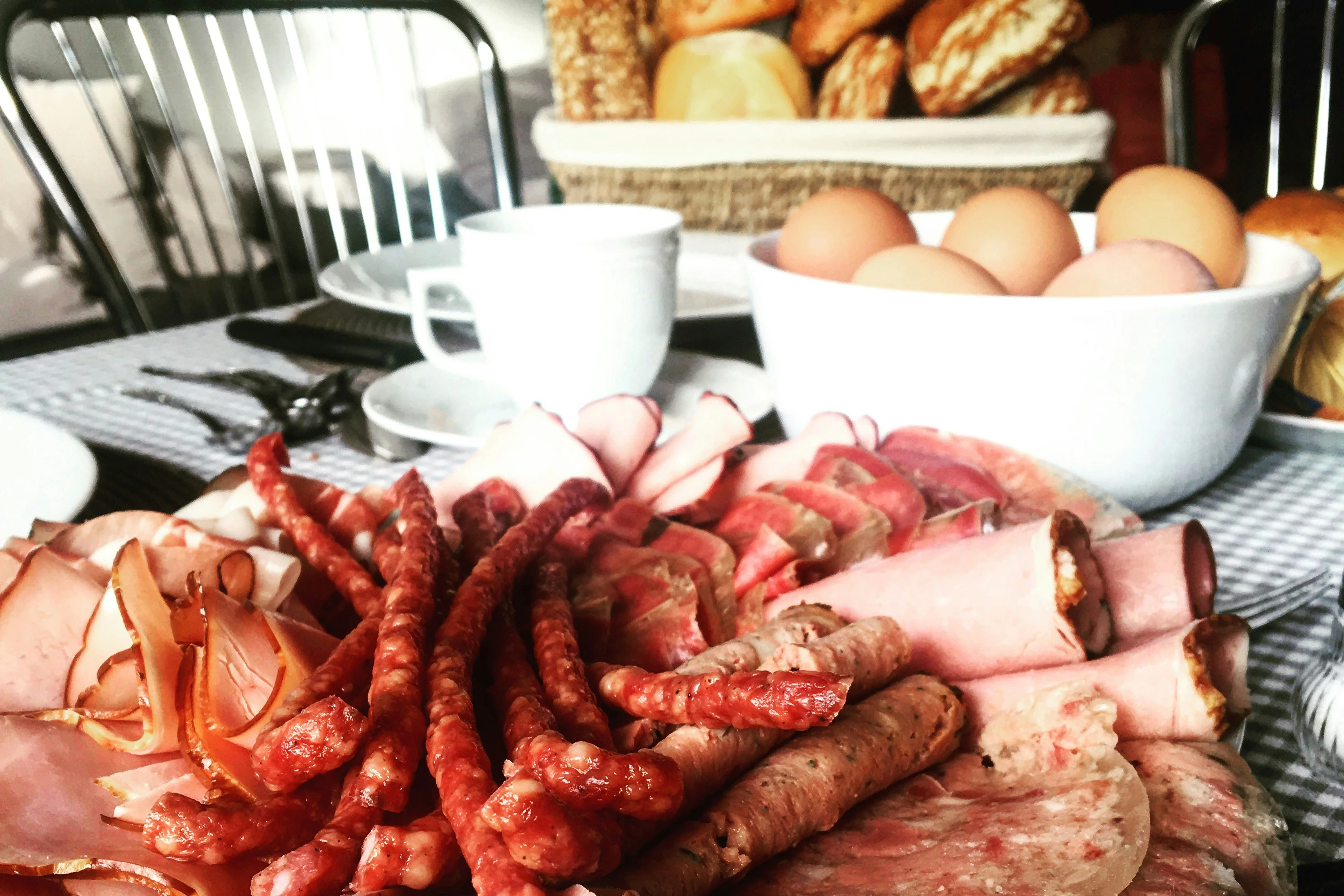
German Cuisine Is Regional, Not National
Ask for German food and the answer changes with every state you cross. Sausage alone runs into the hundreds. Here is how the map actually breaks down.
German Christmas Starts in November
The markets open before Advent does. The calendar has more rules than you would guess. And the presents get handed out on what most of the world considers the wrong evening.
German Clothing Is Not All Lederhosen
Dirndl and Lederhosen belong to the Alps, not to the country. What everybody else wore, and what a lot of people still wear, is the longer and stranger story.
German Religion Splits North from South
Protestant north, Catholic south, and an east where most people now belong to no church at all. Luther drew that border and it never really moved.
German Arts and Language
Here the local scale paid off spectacularly. Music was not a calling back then. It was a trade. Every town with a decent church needed an organist. Every household with money wanted strings through dinner.
Multiply that by a couple of hundred towns. Then you understand why the list of composers out of this one country gets tiring to read. The demand never sat in one capital. It was everywhere at once, and it stayed that way for centuries.
Bach held posts in Arnstadt and Mühlhausen, then Weimar, Köthen, and Leipzig. You could drive that entire career in one afternoon (lunch stop included). Weimar is not a big place by anyone’s measure. It still managed to host Goethe, Schiller, Liszt, and the founding of the Bauhaus in 1919.
Small town, absurd résumé. ;-)
Film arrived later and did something odder. The Berlin studios of the 1920s built an entire visual grammar out of shadow, tilted walls, and staircases that go nowhere good. When the directors who invented it were driven out in the 1930s, they carried it to Hollywood. There it quietly became the way fear looks on a screen. You have seen their work whether or not you have seen their films.
As for the language, its reputation for harshness comes almost entirely from old newsreel footage. Which is a rotten way to judge any language, don’t you think? In practice German is regular. It’s spelled the way it sounds, once you learn the handful of rules.
It also hands you single words where English needs a whole sentence. Feierabend is one of them: the moment work ends and the evening starts. One word here, eight over there.
German Music from Bach to Kraftwerk
Two centuries of church organs and court orchestras. Then four men from Düsseldorf rewired what the rest of the planet would end up dancing to.
German Art Runs Deeper Than Dürer
Dürer’s woodcuts, Friedrich’s fog, the Bauhaus and its very short life, and one dark stretch in the middle that the museums do not skip over.
German Cinema Gave Horror Its Look
The shadows, the crooked angles, the shape on the staircase. Almost every horror film you have ever watched is borrowing from a Berlin sound stage of the 1920s.
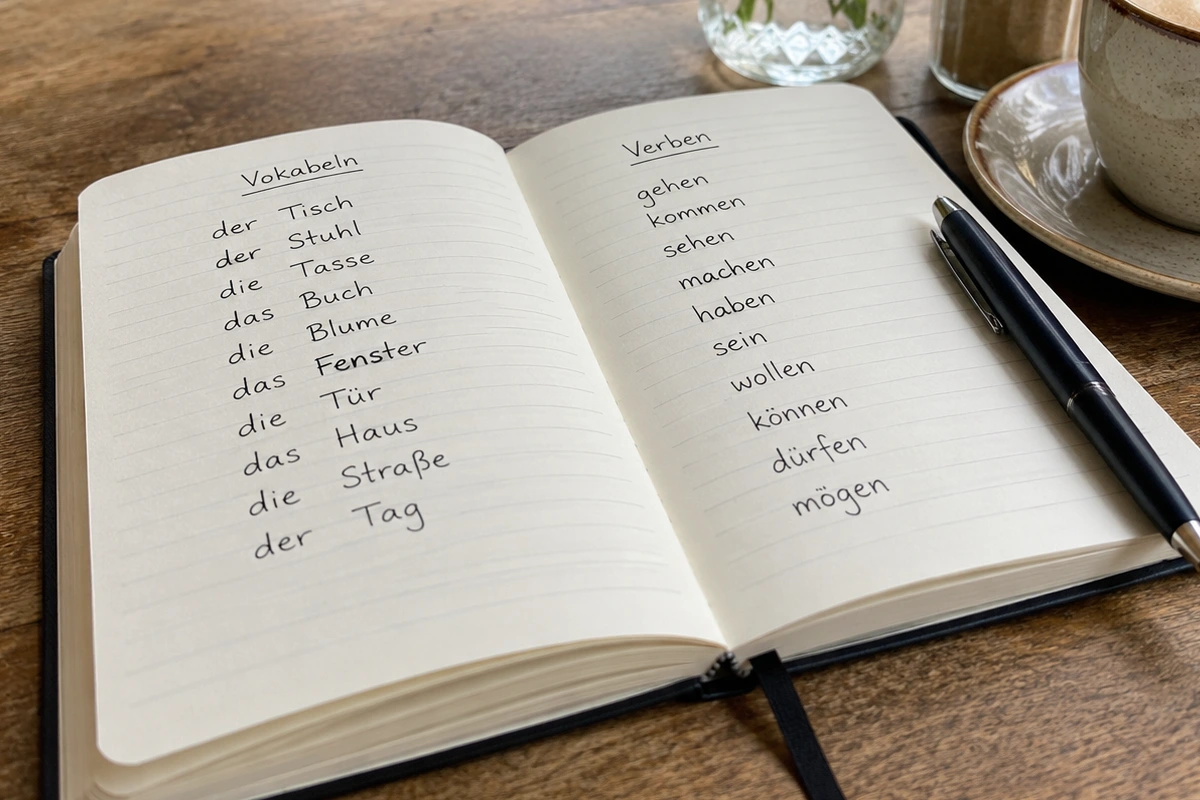
German Phrases Change from North to South
Moin in the north, grüß Gott in the south, and two separate words for you. A dozen phrases is all it takes to change the first ten seconds of every conversation.
German Invention and Craft
Poverty is an underrated engine. The Black Forest farms couldn’t feed a family through the winter, so the farmers spent the cold months carving clocks. Then they walked them to market, the whole load strapped to their backs. Over in the Ore Mountains the silver ran out, and miners with nothing left underground started carving toys instead.
Neither region set out to become famous for anything.
The industrial chapter of that same story is a label, and it started as an insult. In August 1887 the British Parliament passed the Merchandise Marks Act. Imported goods now had to state where they came from. The cutlers of Sheffield had been complaining about cheap German knives passing themselves off as English. The origin mark was meant to warn shoppers off.
It took roughly a decade to flip into the opposite, which has to rank among the great own goals in the history of trade policy. Not quite the warning they had in mind, was it?
Cars are the outsize chapter and get their own page below. What’s easier to miss is the smaller stuff you handle without ever thinking about where it came from. The printing method that made books cheap enough for ordinary people. The compound in your medicine cabinet. The audio format your oldest music files are still saved in.
And the paper cone in your coffee maker. A housewife in Dresden got tired of grounds in her cup. She punched holes in a brass pot and laid a sheet of her son’s blotting paper inside. The patent came in 1908. You probably used her idea this morning, and her first name is still on the box.
Not bad for a country that spent most of its history arguing with itself. :-)
German Inventions You Use Every Day
Movable type, the aspirin in your bathroom, the X-ray at your dentist, the filter in your coffee maker. The list is longer and more domestic than you expect.
Made in Germany Started as an Insult
London ordered the label in 1887 to steer buyers away from cheap German goods. How a warning turned into the most valuable three words in European manufacturing.
German Cars from Benz to Today
One patent from 1886 grew into the industry that feeds a large slice of this country. The real story is messier, and considerably more interesting, than the brochures.
German Cuckoo Clocks Are Not Swiss
They come from the Black Forest, and the famous design is not a farmhouse. It is a railway worker’s cottage, drawn in 1850 by the architect of a Baden rail line.
One closing thought, and it’s the practical one. If you come here hunting for German culture, do not look for the national museum that holds it. There is no such building, and there was never going to be. Look at the bakery, the church tower, and the clock on the wall. Look at the sausage two towns over that somebody will happily defend against yours.
That is where the thing actually lives.
For how all of it came to be this way, start with German history. For the country itself, the wider view sits on Germany.
Me? I’ve given up trying to explain my own country in one sentence. Last time I tried it, a man from Hamburg corrected me. He was right. So was I.