
Germany has a president. The job comes with a palace in Berlin, a signature on every federal law, and no power to run the country.
The chancellor runs the country. Up to a point.
That point is the whole story. Almost every rule in this system exists to stop one person, one party, or one building from holding too much at once. Power sits in Berlin, and in sixteen state capitals, and in a courthouse far from all of them.
The reason is written into the country’s history. The constitution that came before this one let power pile up at the top, and by 1933 a democracy had been dismantled from inside it. The people who drafted the Grundgesetz (Basic Law) in 1949 had watched that happen up close. They built the opposite.
So nothing here moves fast. Getting a chancellor into office takes a coalition, and getting one out takes a ready-made successor. That was the idea.
The pages below split the subject in two. First the offices and who holds what. Then how those offices get filled, and who gets to overrule them.
How Germany Is Governed
Nobody here votes for a chancellor. You vote for a party, the party sends people to the Bundestag, and those people elect the chancellor by secret ballot. It’s an indirect route—three steps, and only the first one is yours. It usually goes through on the first attempt.
Usually. In 2025 a chancellor-designate lost that first round, which had never happened since 1949, and won the second one a few hours later. All nine chancellors before that had managed it in one go.
Once somebody holds the job, removing them is deliberately awkward. Parliament can’t just fire a chancellor and sort out the rest afterward. Article 67 says it has to elect a replacement in the very same vote. In more than seventy-five years that has been tried twice and worked once, in 1982.
The attempt that failed, in 1972, is the better story. The opposition came up two votes short. Decades later it turned out that East German intelligence had paid at least one deputy to stay loyal to the sitting chancellor.
The price was 50,000 marks, and the government survived. Too bad it took decades for that to come out.
Berlin shares power sideways as well. Schools, police, and broadcasting belong to the states (yes, broadcasting too). The states also get a direct say through the Bundesrat, where the sixteen state governments vote on federal law. Each one has between three and six votes depending on its population, and it casts them as a block. That math is generous to the small ones. ;-)
The armed forces follow the same logic. Sending soldiers abroad takes a vote in the Bundestag, not just an order from the government.
The German Chancellor Is Hard to Remove
The most powerful office in the country, and the one with the strangest job security. What the chancellor decides alone, and where the job runs into a wall.
German Government Runs on Coalitions
Ministries, the cabinet, and the written deal that holds two or three parties together. Where the laws that reach parliament are actually drafted.
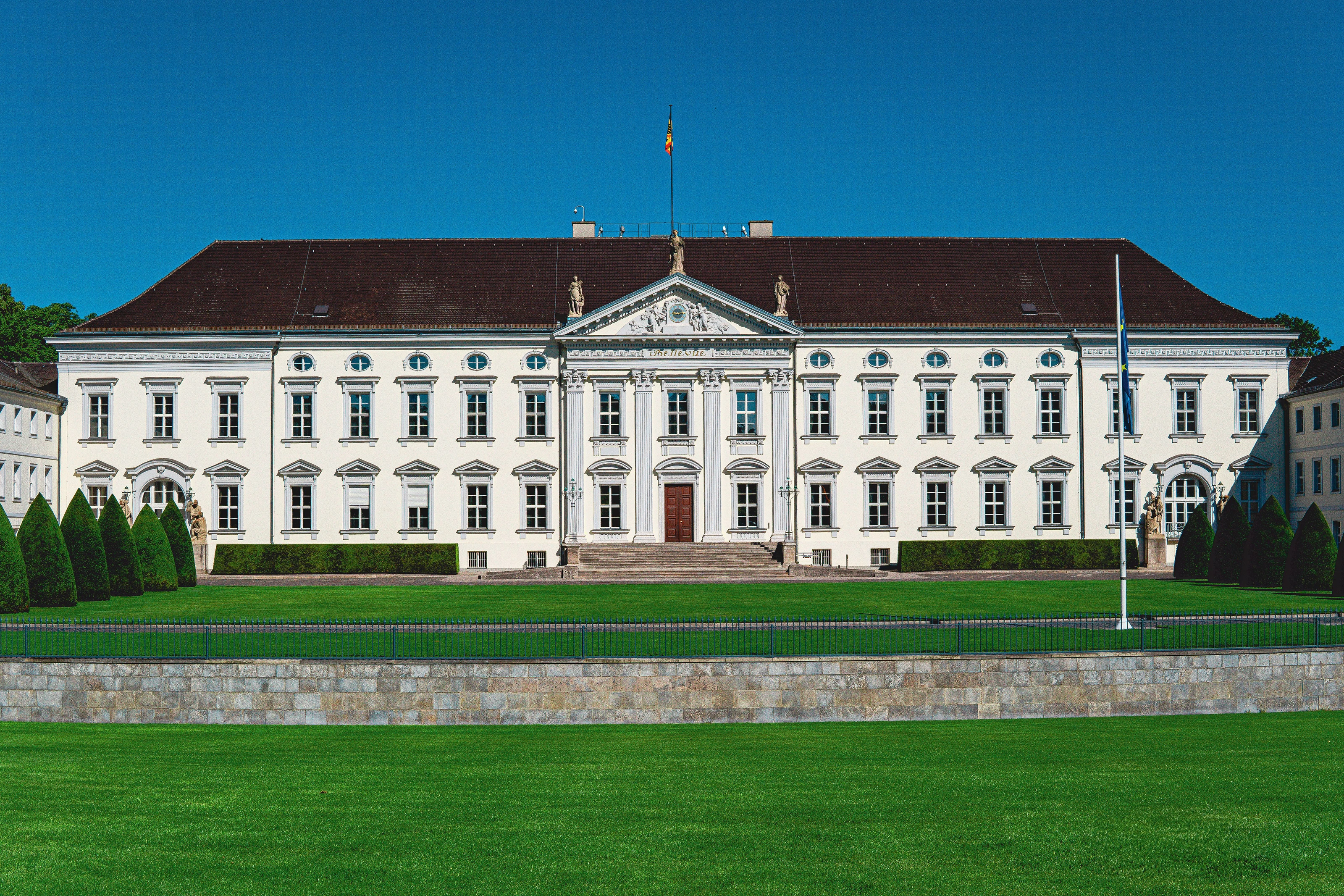
The German President Signs Laws but Does Not Rule
Head of state with almost no power to govern, elected by an assembly that meets once every five years. Why the office was built that way is the interesting part.
The German Military Needs a Vote to Deploy
The draft ended in 2011, and what came after it looks nothing like the old system. What the Bundeswehr does, who it answers to, and how big it’s meant to get.
Elections, Parties, and the Courts
Elections decide who governs. They don’t decide what a government is then allowed to do.
The federal vote comes around every four years, and the sixteen states run their own on their own timetables. Somewhere in this country there’s nearly always a campaign under way. Candidates climb through parties rather than around them. So a strong personality on its own doesn’t get very far.
One rule keeps the arithmetic manageable. A party that stays under five percent of the vote gets no seats at all. Harsh? Maybe. It also keeps parliament from splintering the way the one before 1933 did.
One party almost never wins enough seats to govern by itself. Every government is therefore a deal between two or three of them—hammered out over weeks while the old cabinet keeps the lights on. Those weeks look like paralysis from outside. They’re just the system doing what it was built to do. Dull to watch, though, isn’t it?
Whatever comes out of those talks still runs into the Grundgesetz. The people who wrote it in 1949 put the basic rights at the very front. They come ahead of a single word about how the state is organized. Weimar had tucked its rights near the back, and they proved worthless the moment somebody wanted them gone.
Enforcing that went to a court in Karlsruhe rather than to anybody in Berlin. The Bundesverfassungsgericht can strike down a law that sailed through parliament, and it does. Parts of the constitution are beyond amendment altogether, even for the two-thirds majority that can change everything else.
A constitution that guards itself against its own parliament. Sounds like a contradiction, doesn’t it? It is the point (that’s what Karlsruhe is for).
The same instinct shaped the courts and the police. Both are mostly run by the states, hired and paid by the sixteen. A couple of federal forces sit on top of that, for borders and serious crime. No single office in Berlin commands the police in your street. Same reasoning, one more time.
For how the country ended up with this system, start with German history. For the sixteen states and what each one controls, see German states. And if the real question behind all this is whether you could picture yourself here, living in Germany is the practical companion to this page.
All of this is open to visitors, which is the part most people miss. The glass dome above the Bundestag costs nothing beyond registering ahead, and up there you’re standing directly over the chamber where the arguing happens. The public gallery is open during debates as well (bring something to read for the procedural stretches).
You don’t need a word of German to feel the room change when somebody lands a point.